How Quants works
The collection, the quantum threat in plain terms, exactly what we sign and how to check it, and how minting works.
What is Quants
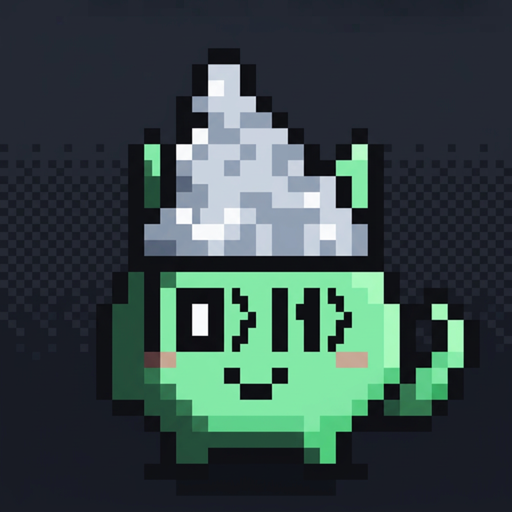
Quants is 1,000 pixel critters on Solana, minted as Metaplex Core NFTs and gated by $QUANTS. Each one is a 32 by 32 pixel drawing rendered by code from stacked trait layers, and no two share the same trait combination.
The twist: every Quant's provenance is signed with ML-DSA-65, the post-quantum signature NIST standardized as FIPS 204 on August 13, 2024. We call it the first quantum-proof NFT collection on Solana. The precise version: its provenance signatures are post-quantum, its ownership is regular Solana.
The quantum threat
Wallets prove ownership with elliptic-curve signatures. Solana uses ed25519, Bitcoin and Ethereum use secp256k1. Their security rests on one assumption: you can't turn a public key back into its private key. Shor's algorithm, running on a large enough error-corrected quantum computer, does exactly that. Grover's algorithm is the smaller worry: it only square-roots brute force, so SHA-256 and AES-256 are considered fine.
- Mar 2026Google Quantum AI estimates 256-bit elliptic-curve keys could fall to under 1,200 logical qubits, or under 500,000 physical superconducting qubits, in minutes.
- May 2025Craig Gidney (Google) cuts the RSA-2048 estimate to under a million noisy qubits, in under a week, down from 20 million in 2019.
- Apr 2026The largest elliptic-curve key publicly broken on quantum hardware: 15 bits. Real keys are 256.
- 2035NIST plans to disallow ECDSA, EdDSA and RSA signatures, with deprecation starting after 2030.
Solana is working on it. Blueshift shipped the Solana Winternitz Vault in January 2025, a hash-based, quantum-resistant vault that runs on mainnet today. Anza and Firedancer picked Falcon as their leading post-quantum signature candidate in 2026, though nothing is activated on mainnet yet. Quants is a much smaller thing: a collection whose signed provenance already uses the new math.
How the signature works
We generated one ML-DSA-65 keypair for the collection. For every Quant we hash the final PNG (sha256), build a message from its id, trait hash and image hash, and sign it:
quants:v1:<id>:<comboHash>:<imageSha256>
The public key is published at /pq/key.json and each signature at /pq/sig/<id>.json. The same fields sit in every token's metadata under properties.pq.
{
  "id": 412,
  "scheme": "ML-DSA-65",
  "keyId": "<first 16 hex of sha256(publicKey)>",
  "comboHash": "<sha256 of the trait combo>",
  "imageSha256": "<sha256 of the PNG bytes>",
  "message": "quants:v1:412:<comboHash>:<imageSha256>",
  "signature": "<3,309 bytes, base64>"
}- ML-DSA-65 is NIST security category 3. Public key 1,952 bytes, signature 3,309 bytes.
- It's lattice-based. There's no known quantum algorithm that breaks it the way Shor breaks elliptic curves.
- Signing and verifying use @noble/post-quantum, an open-source TypeScript implementation.
- The secret key never touches the site. Only the public key and signatures are published.
What is and isn't post-quantum
How the gate works
Two phases. First, while the first 250 last, a keeper mints one Quant directly to every new wallet holding at least 100,000 $QUANTS. No site visit, no signature. After that, minting moves to the site and needs 1,000,000 $QUANTS.
- Connect your wallet (Phantom, Solflare, Backpack, or email).
- Sign a one-time message to prove you control it. No transaction, no gas.
- When you mint, we add up your $QUANTS across all your token accounts and check it on-chain against the gate, right then.
Your $QUANTS never leaves your wallet.
Get $QUANTS
$QUANTS is a pump.fun token on Solana. To pass the gate:
- Open a Solana wallet and fund it with SOL.
- Buy $QUANTS on pump.fun or any Solana aggregator, using the mint address below.
- Make sure the wallet shows at least 1,000,000 $QUANTS, then go to the mint page.
How to mint
Contracts
Traits & tiers
Every Quant is built from eight layers: Ground, State, Body, Skin, Eyes, Mouth, Headwear and Accessory. Each trait has a weight and a rarity score. A Quant's tier comes from the sum:
Royalties are set at the collection level and apply to every piece.
FAQ
So is my wallet quantum-proof now?
No. Every Solana address is an ed25519 public key, yours included, and an NFT can't change that. What's post-quantum about Quants is the provenance: each piece's art and traits are signed with ML-DSA-65, and that signature can't be forged by Shor's algorithm. If you want quantum-resistant storage for funds on Solana today, look at hash-based options like Blueshift's Winternitz Vault.
Is the signature checked on-chain?
No, and on purpose. An ML-DSA-65 signature plus its public key is 5,261 bytes, more than a whole Solana transaction (4,096 bytes since September 15, 2026). The public key and all signatures are published as static files and checked in your browser at /verify. Anyone can rerun the check at any time.
Can a quantum computer break crypto today?
No. The largest elliptic-curve key publicly broken on quantum hardware so far is 15 bits (Project Eleven's Q-Day Prize, April 2026). Real keys are 256 bits. The concern is the trend: published resource estimates for breaking 256-bit curves keep falling.
Is this NIST certified?
No. NIST standardizes algorithms, it doesn't certify projects. Quants uses the FIPS 204 algorithm (ML-DSA-65) through the open-source @noble/post-quantum library.
How many Quants can I mint?
One per verified wallet. Holding more $QUANTS doesn't unlock more. Supply is 1,000, fixed.
Do I pay for the mint or gas?
No. Minting is free. The studio's server wallet pays rent and fees. You just need to hold the $QUANTS gate amount.
Which Quant will I get?
One is drawn at random from the unminted supply and minted to your wallet. You can't pick a known piece by number.
Where does my Quant show up?
In your wallet (Phantom, Solflare, Backpack) as a Metaplex Core asset, on your My Quants page, and in the gallery.